Oct 27, 2026
Articles
Articles / Oct 20, 2026
Why is the UAE investing so heavily in Africa?
Gulf investment in Africa is building a system, not a portfolio.
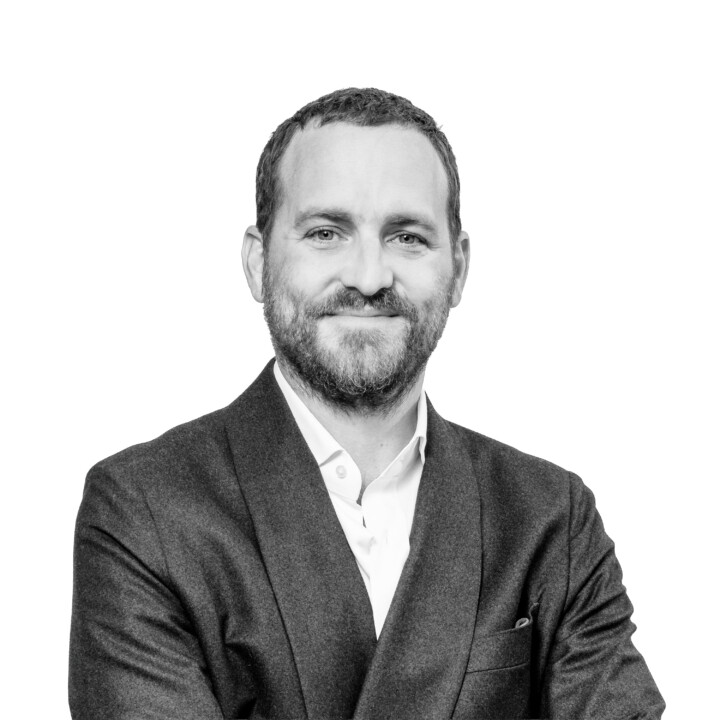
Guy Hacking
MISA Group CEO · 6 minutes

The UAE is investing in Africa because it sees the continent as central to its economy, after oil. Its government puts Emirati investment at more than US$110bn between 2019 and 2023; over US$70bn of it in energy and renewables. Emirati groups are building ports, power plants and grid links that reinforce each other: a system, not a portfolio.
How much has the UAE invested in Africa?
While allocators in London and New York run another round of diligence on whether Africa is investable, the UAE has spent US$110bn deciding that it is.
That figure comes from the UAE’s own Minister of Economy, Abdulla bin Touq Al Marri, and covers 2019-2023. He ranks the UAE fourth among investors in Africa, behind the United States, China and the European Union, and says more than US$70bn of it went into green energy, energy and renewables (WAM; Gulf News). But if you count announced projects instead, the UAE comes first. FT Locations data show Emirati companies announced US$110bn of projects in Africa over the same five years, US$72bn of them in renewable energy (African Business). On that measure, the Guardian has called the UAE Africa’s biggest investor.
Announced is not built, and some of those projects will slip or shrink. But the direction is still plain.
What does ‘a system, not a portfolio’ mean for Gulf investment in Africa?
Nadim Koteich, a Lebanese-Emirati media executive and policy adviser, put it to the Financial Times like this: “Africa is one of the emerging lungs of the global economy… What Abu Dhabi is building is not a portfolio, it’s a system.”
A portfolio is a set of positions you can exit one at a time. A system is infrastructure where each piece raises the value of the others.
Look at what sits on the ground. DP World is building the US$1.1bn Ndayane deepwater port in Senegal, its largest port investment in Africa (Maritime Executive). Masdar has committed to 10GW of clean energy capacity in Africa by 2030, backed by US$2bn of its own equity and US$8bn of project finance it aims to raise (AGBI).
A port needs reliable power. Power plants need industrial customers. Those customers need a port to move what they make. Own enough of the chain and every new asset makes the existing ones worth more.
Building a system is slower, more expensive and far harder to walk away from. For anyone deciding whether to follow, that is the signal: this capital intends to stay. This philosophy mirrors the one we hold at MISA Group: the best returns on the continent come to those who stay, and we are committed to Africa for the long haul. We’ve got deep on-the-ground experience paired with world-class expertise; it’s the right formula with which to approach energy investment on the continent.
Why is infrastructure different from extraction in African energy investment?
Africa has hosted extraction for a century. Extraction takes value out in cargoes. Infrastructure leaves an asset behind.
A port and a grid connection are still there when the commodity cycle turns. A shipped cargo of crude oil is not. The port keeps earning fees, the grid keeps carrying power, and both make the next project cheaper to build.
The gap these assets fill is large. Africa attracts only 3% of global energy investment while home to a fifth of the world’s population, and energy investment on the continent needs to double to more than US$200bn a year by 2030 (IEA, Financing Clean Energy in Africa). Capital that builds the plumbing closes that gap. Capital that only extracts does not.
It’s why at MISA we hold a varied portfolio of companies that deliver across this value chain, from trading oil to building renewable assets like hybrid energy plants, along with the infrastructure needed to support them. One thing all of our companies have in common: they do not merely extract. They invest, and put down roots.
What should investors take from the UAE’s approach to Africa?
I would not assume every one of these investments earns its cost of capital. Some are strategic first and financial second, and a sovereign can wait longer for a return than the private sector can. Some have drawn scrutiny, and anyone co-investing should do their own work on governance.
But three things follow for allocators who are still deciding:
- The Africa discount is being priced by people on the ground. Investors building ports and power plants are not applying the risk premium that desk-based committees still use.
- Infrastructure creates the next layer of bankable projects. A new port, grid link or anchor power plant lowers the risk for the smaller energy, logistics and industrial businesses that grow around it. That is where renewable energy in Africa becomes bankable at mid-market scale.
- Terms are set early. Whoever builds the infrastructure sets the terms for what moves across it for the next thirty years.
The people doing that today are not the ones still pricing in an Africa discount.
Where does MISA Group fit into Gulf and African energy investment?
We see this from the ground rather than from a model. MISA Group is built on three decades of trading energy across Africa, and parts of our businesses run from the UAE, through MISA FZC, Modaso Energy, and a growing presence in the UAE for Mocoh.
Our own version of the system is smaller, but the logic is the same. Through Mocoh and MISA Energy we keep fuel moving today. Through Modaso and Bioscape we build the renewable assets that will take a growing share of that demand. Each business makes the others more useful to the same customers. You can read more about how we invest on our Approach page, or see our portfolio.
“A portfolio is a set of positions you can exit one at a time. A system is infrastructure where each piece raises the value of the others. Building a system is slower, more expensive and far harder to walk away from. For anyone deciding whether to follow, that is the signal: this capital intends to stay.”
Guy Hacking
MISA Group CEO
Related reading
- Is African energy investment a choice between solar and oil?
- Introducing MISA
- Modaso Energy launches: connecting technology, finance and industry
Frequently asked questions about Gulf investment in Africa
How much has the UAE invested in Africa?
The UAE’s Minister of Economy, Abdulla bin Touq Al Marri, puts Emirati investment in Africa at more than US$110bn between 2019 and 2023. That makes the UAE the fourth largest investor on the continent, after the United States, China and the European Union. More than US$70bn went into green energy, energy and renewables. FT Locations data put announced Emirati projects over the same period at US$110bn, with US$72bn in renewables.
Is the UAE the largest investor in Africa?
It depends on the measure. On the UAE government’s own figures for investment, it ranks fourth, behind the United States, China and the EU. On announced new projects between 2019 and 2023, FT Locations data led the Guardian to call it Africa’s biggest investor (Dec 2024). Announced projects can slip or shrink, so investors should read the second measure as intent rather than capital already deployed.
Which sectors does UAE investment in Africa target?
Energy leads. More than US$70bn of the UAE’s US$110bn in 2019 to 2023 went to green energy, energy and renewables, according to the UAE Minister of Economy. He names infrastructure, logistics, real estate and tourism as the other top sectors. Ports are a large part of the logistics push: DP World’s US$1.1bn Ndayane port in Senegal is its largest port investment in Africa.
Is renewable energy in Africa bankable?
It can be, when a project has secure land, a creditworthy buyer for its power, a grid connection and a plan for currency risk. The IEA says Africa attracts about 3% of global energy investment and needs more than US$200bn a year by 2030. Large commitments such as Masdar’s 10GW target by 2030 show that major investors now judge many African renewable projects bankable.
Guy Hacking is CEO of MISA Group. Guy began his career in private equity and investment banking, acquiring and operating infrastructure assets. He joined Mocoh to support its asset investments before becoming CFO and then CEO. Today he leads MISA Group’s strategy and capital allocation, building institutional-grade businesses that pair commercial returns with lasting impact across Africa’s energy landscape.
Posted in Articles